Choosing among the top Brushless Gearbox manufacturers requires more than comparing catalog prices. Global buyers need evidence of engineering depth, production consistency, and responsive technical support.
A suitable supplier should explain torque ratings, reduction ratios, backlash, noise levels, thermal limits, and expected service life. Ask for test reports, dimensional drawings, material details, and sample data. A polished website is not enough. Sometimes, the quietest gearbox on paper performs poorly after repeated load cycles. That uncomfortable possibility deserves attention.
Dr. Peter Harrop, a long-time electric-motor market analyst, offers a useful principle: “The right motor is the one that fits the application, not the one with the highest specification.” The same thinking applies to a Brushless Gearbox. A compact robot may need low backlash and precise positioning. An automated conveyor may prioritize continuous torque, sealing, and easy maintenance. These are different buying decisions.
This guide examines leading manufacturers serving international customers. It considers product range, customization, quality controls, certifications, delivery capability, and after-sales engineering. Real-world details matter. Can the supplier support metric and imperial designs? Can it provide replacement parts after several years? Does the quoted torque remain realistic at elevated temperatures?
No ranking is perfect. Manufacturer information can be incomplete, and buyer requirements often change during testing. Use this overview as a practical starting point, then verify every critical specification before placing an order.
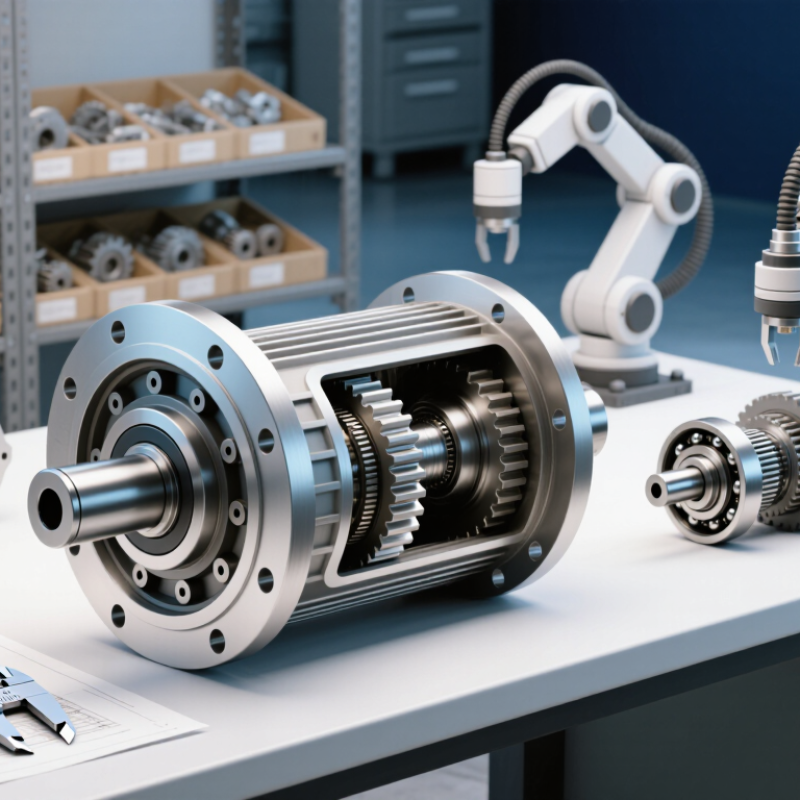
A brushless gearbox combines a BLDC motor with gears that reshape speed and torque. The motor uses electronic commutation instead of mechanical brushes. This reduces wear and supports frequent cycling. It also requires a suitable controller, wiring, and feedback strategy. Sensorless control may work well at high speed. Low-speed starting can be less predictable.
Gear ratio determines the practical output. A 10:1 ratio can reduce speed roughly tenfold while increasing torque near tenfold, before efficiency losses. Real output torque depends on motor current, winding temperature, gear friction, and duty cycle. A simple estimate is motor torque multiplied by ratio and efficiency. Do not trust the estimate blindly. A spreadsheet can still mislead. Measure starting torque and loaded speed when possible.
Global buyers should ask manufacturers for continuous torque, peak torque, rated speed, backlash, noise, and thermal data. Continuous torque matters more than a brief peak in lifting or indexing equipment. Check whether the gearbox survives repeated reversals, not only steady rotation. Planetary stages often provide compact strength, while spur gears may reduce cost and complexity. However, neither choice is automatically better. Poor alignment can create vibration, even with accurate gears. Confirm shaft dimensions, mounting tolerances, connector details, and testing conditions before comparing quotations. A reliable supplier should explain these limits clearly.گ
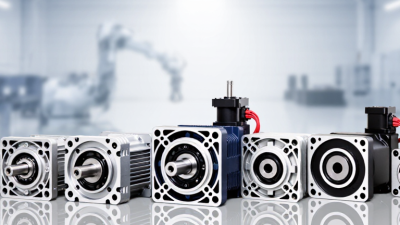
Top Brushless Gearbox Manufacturers for Global Buyers
Global demand for brushless DC motors is rising across automation, logistics, medical equipment, and energy systems. Industry forecasts often indicate high-single-digit annual growth through the decade, although estimates vary by region and application. China, Europe, North America, and Southeast Asia remain important production and consumption centers. Demand is especially visible in automated guided vehicles, compact conveyors, packaging lines, and battery-powered tools.
For global buyers, gearbox manufacturers should be assessed beyond motor speed and catalog torque. A reliable supplier should provide verified efficiency curves, backlash data, thermal limits, and test conditions. Ask for load-cycle records, not only laboratory peak values. In a warehouse, a gearbox may face thousands of short starts each day, with dust, vibration, and frequent reversals. Sealed bearings and stable lubrication can matter more than a small efficiency advantage.
Motor growth does not automatically guarantee product quality. Supplier reviews sometimes focus too heavily on unit price. That is a mistake. Some low-cost assemblies perform well initially but lose precision after repeated shock loads. Certification documents also need careful checking, because test scope may be narrower than expected. Buyers should compare samples, production consistency, spare-part access, and technical response times before signing large orders. The market is expanding, but specification discipline still decides whether a brushless gearbox works reliably on the factory floor.
| Data Dimension | Indicator | Reported Data | BLDC Gearbox Relevance | Source / Data Note |
|---|---|---|---|---|
| Global Demand Signals | ||||
| Electric motor systems | Share of global electricity consumption | Approximately 43–46% | High-efficiency motor, drive, and gearbox combinations can address a major industrial energy-use category. | International Energy Agency, “Energy-Efficiency Policy Opportunities for Electric Motor-Driven Systems,” 2011. Source |
| Industrial electricity demand | Electric motors’ share of industrial electricity use | About 70% | Supports demand for efficient variable-speed solutions in pumps, fans, conveyors, robotics, and automated machinery. | International Energy Agency motor-system efficiency analysis. Source |
| Electric passenger vehicles | Global electric-car sales in 2023 | More than 14 million units | Electrification expands the supply base for compact, high-efficiency permanent-magnet and electronically commutated motor technologies; this is a demand proxy rather than a direct BLDC market count. | International Energy Agency, “Global EV Outlook 2024.” Source |
| Industrial robotics | New industrial robot installations in 2023 | 541,302 units | Robotic joints, end-effectors, AGVs, and material-handling systems commonly require compact motor-drive and reduction assemblies. | International Federation of Robotics, “World Robotics 2024.” Source |
| Industrial automation trend | Typical system requirement | High torque density, precise speed control, low maintenance | These requirements favor BLDC motors paired with planetary, spur, or harmonic-style reduction mechanisms, depending on load and backlash targets. | Engineering selection criteria; application-level summary, not a market-size estimate. |
| Efficiency and Regulatory Benchmarks | ||||
| IEC motor efficiency classes | International classification framework | IE1, IE2, IE3, IE4, and IE5 | Buyers should request the applicable test method, rated-point efficiency, speed range, and controller losses rather than comparing motor efficiency alone. | IEC 60034-30-1, rotating electrical machines efficiency classes. Source |
| European Union motor requirement | Three-phase motors within covered product scope | IE3 from 0.75 to 1,000 kW; IE2 for selected 0.12–0.75 kW motors | BLDC products must be checked for scope exclusions, rated voltage, duty type, pole configuration, and whether the complete motor-drive system is regulated. | Commission Regulation (EU) 2019/1781, applicable from 1 July 2021 with defined exclusions. Source |
| European Union higher-efficiency requirement | Selected three-phase motors in the 75–200 kW range | IE4 requirement from 1 July 2023 | Demonstrates the direction of travel toward higher efficiency and reinforces the need for documented system-level performance. | Commission Regulation (EU) 2019/1781, amended implementation schedule. Source |
| European Union variable-speed drives | Covered drive power range | 0.12–1,000 kW; IE2 drive efficiency requirement for covered products | For BLDC systems, the controller or electronic drive can materially affect total efficiency, heat generation, EMC performance, and lifetime. | Commission Regulation (EU) 2019/1781. Source |
| Buyer-Oriented BLDC Gearbox Evaluation Dimensions | ||||
| Motor technology | Commutation method | Electronic commutation | Confirm sensor or sensorless control, Hall-sensor placement, encoder compatibility, startup behavior, and controller interoperability. | Technical procurement dimension; specifications must be verified against the individual product datasheet. |
| Gear reduction | Common architecture options | Planetary, spur, helical, worm, or cycloidal | Planetary and helical designs generally suit higher efficiency and torque density; worm designs may offer high reduction in a compact package but can have lower efficiency. | General mechanical-design comparison; actual performance depends on ratio, lubrication, load, and operating speed. |
| Speed range | Required operating profile | Continuous speed, peak speed, acceleration, and duty cycle | BLDC systems should be evaluated at the complete operating envelope, including thermal derating and repeated start-stop cycles. | Buyer checklist; request speed-torque curves and thermal test conditions. |
| Torque rating | Continuous and peak output torque | Application-specific; report both values | Peak torque alone is insufficient for conveyors, AGVs, robotics, and lifting equipment. Verify allowable shock load, service factor, and gearbox life. | Buyer checklist; use rated output torque at the specified reduction ratio and duty cycle. |
| Backlash and positioning | Required output accuracy | Specify arc-minute tolerance where applicable | Low-backlash gearing is important in robotics, CNC auxiliary axes, indexing, and precision automation; standard industrial drives may accept higher backlash. | Buyer checklist; require measured backlash, not only a nominal gearbox type. |
| Ingress protection | Environmental protection level | Specify IP rating for the complete assembly | Do not assume the motor, gearbox, connector, and cable gland share the same protection rating. Confirm the tested configuration. | IEC 60529, degrees of protection provided by enclosures. Source |
| Compliance documentation | Global-market documentation package | Declaration, test reports, drawings, manuals, and traceability | For international purchasing, compare documentation completeness, change-control procedures, warranty terms, and after-sales support in addition to price. | Procurement best practice; requirements vary by destination market and application. |
Top Brushless Gearbox Manufacturers for Global Buyers?
A serious manufacturer should show more than a polished catalog. Ask for documented quality procedures, incoming inspection records, and motor endurance data. Useful evidence includes winding resistance checks, gear backlash measurements, noise testing, and repeated load cycles. A factory that records serial numbers can trace a failed unit to its production batch. That matters when machines operate far from the supplier.
IP ratings require careful reading. An IP65 motor enclosure, for example, resists dust ingress and low-pressure water jets under defined test conditions. It does not guarantee protection against immersion, chemicals, or poor cable installation. Buyers should request test conditions, gasket materials, shaft-seal details, and connector ratings. The gearbox housing may have a different protection level from the motor. Small difference. Large consequence.
IEC 60034 compliance should be supported by clear test reports, not a logo on a webpage. Review documents covering temperature rise, efficiency, insulation strength, vibration, and rated operating conditions. Check whether the stated ratings match the actual duty cycle, ambient temperature, and mounting position. In factory evaluations, I would compare samples from different batches and inspect how defects are handled. Some suppliers may provide excellent prototypes but inconsistent production units. That weakness deserves attention. Documentation can also be incomplete, especially for customized assemblies. A practical buyer should record open questions, request corrective actions, and avoid accepting vague promises about quality control.
This benchmark compares commonly specified enclosure ratings for industrial brushless gearboxes. The first IP digit represents protection against solid particles, while the second digit represents protection against water. IP ratings are defined by IEC 60529, and motor enclosure protection is referenced within the IEC 60034 series. Buyers should also request documented ISO 9001 quality-system certification, routine test records, dimensional inspection data, and an explicit IEC 60034 compliance statement.
Global buyers often compare brushless gearbox manufacturers through efficiency, backlash, rated life, and thermal performance. These figures should be tested under the intended load, not copied from a general catalog. A gearbox showing 92% efficiency may perform differently at low speed, high torque, or frequent reversal. Ask for test conditions, lubrication details, and motor compatibility.
Backlash deserves special attention in robotic joints, indexing equipment, and precision conveyors. A small value at shipment may increase after thousands of cycles. Request both initial and expected lifetime backlash data. Rated life should include load profile, duty cycle, mounting position, and ambient temperature. “Long life” is not a useful specification alone. I have seen buyers compare hours without checking whether the tests used continuous or intermittent operation.
Thermal performance can decide whether a compact gearbox survives in a sealed machine. Review heat dissipation, housing material, allowable surface temperature, and derating curves. Efficiency losses become heat, especially during repeated acceleration. Measure the housing near the output bearing during a realistic trial. It may feel acceptable in a cool laboratory, then run too hot inside a cabinet. That difference matters.
A reliable manufacturer should provide traceable inspection records, sample test reports, and clear tolerance ranges. Communication quality also reveals technical maturity. If answers stay vague, request a pilot batch and verify the critical dimensions independently. No selection method is perfect. Application data is often incomplete, and that weakness should be recorded before purchase.
When evaluating brushless gearbox manufacturers, global buyers should verify certificates before discussing price. Look for ISO 9001 quality systems, CE compliance, and RoHS documentation where applicable. Certificates must match the actual factory and product series. Do not accept a scanned logo alone. Request test reports, material records, and traceable batch numbers. A careful supplier can explain each document clearly.
Customization often covers gear ratios, shaft dimensions, mounting holes, connectors, encoders, and protective coatings. Share drawings with tolerances, operating cycles, load data, and ambient temperature. Small details matter. A gearbox may fit mechanically but fail under continuous heat. Ask for noise, backlash, efficiency, and endurance results from a comparable design. Some suppliers promise everything too quickly. That deserves a second review.
MOQ affects both risk and unit cost. Confirm whether the minimum applies to prototypes, pilot orders, or mass production. Ask about tooling charges and sample lead times in writing. After-sales support should include installation guidance, failure analysis, spare parts, and response targets. A real support process is more valuable than a polished brochure. Keep communication records. One weakness in many sourcing projects is assuming technical support will remain strong after payment. A defined warranty scope and escalation contact can prevent expensive delays.