10 Essential Tips for Choosing the Right Reduction Gearbox
Choosing the right reduction gearbox is critical for enhancing machine performance. According to a report by Smart Industry, an optimized gearbox can increase efficiency by up to 15%. This statistic highlights the importance of making informed decisions in selection.
Renowned gearbox expert, Dr. Emily Harris, emphasizes, “A well-chosen reduction gearbox can transform machinery operations.” Her insight reflects the considerable impact that the right gearbox can have, not just on efficiency, but also on longevity and operational costs.
Despite the available technology, many still select reduction gearboxes based on assumptions rather than data. This often leads to mismatches that compromise efficiency. The market's complexity requires careful consideration of specifications and applications. The right choice requires balancing cost with performance needs, which can be challenging.
Understanding the Basics of Reduction Gearboxes
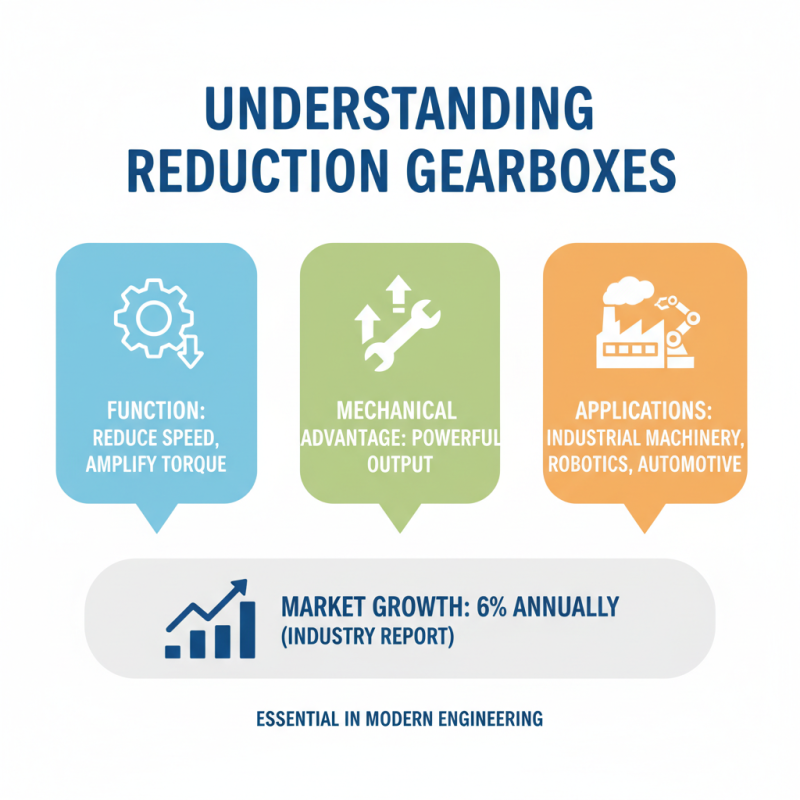
Reduction gearboxes play a crucial role in mechanical systems. They help in reducing the speed of motors while amplifying torque. This feature is vital in many applications, from industrial machinery to robotics. According to a recent industry report, the global market for reduction gearboxes is expected to grow by 6% annually. This growth underscores their importance in modern engineering.
Understanding the basics of reduction gearboxes is essential. They consist of gears that vary in size and design. Larger gears reduce speed significantly but increase torque. On the other hand, smaller gears offer speed but at the cost of torque. It's essential to evaluate your needs carefully. Choosing the wrong size can lead to inefficiencies and mechanical failures. A study found that 20% of gearbox failures stem from incorrect sizing. This statistic highlights the need for thorough analysis before making a decision.
The complexity of gearbox selection can be daunting. Different applications require specific gear ratios and configurations. Therefore, engineers often face challenges when simplifying their options. It's not unusual to miss critical specifications during the selection process. Adjusting for inertia, load types, and environmental factors adds to the difficulty. Being aware of these challenges can prevent costly mistakes.
Key Factors to Consider When Selecting a Gearbox
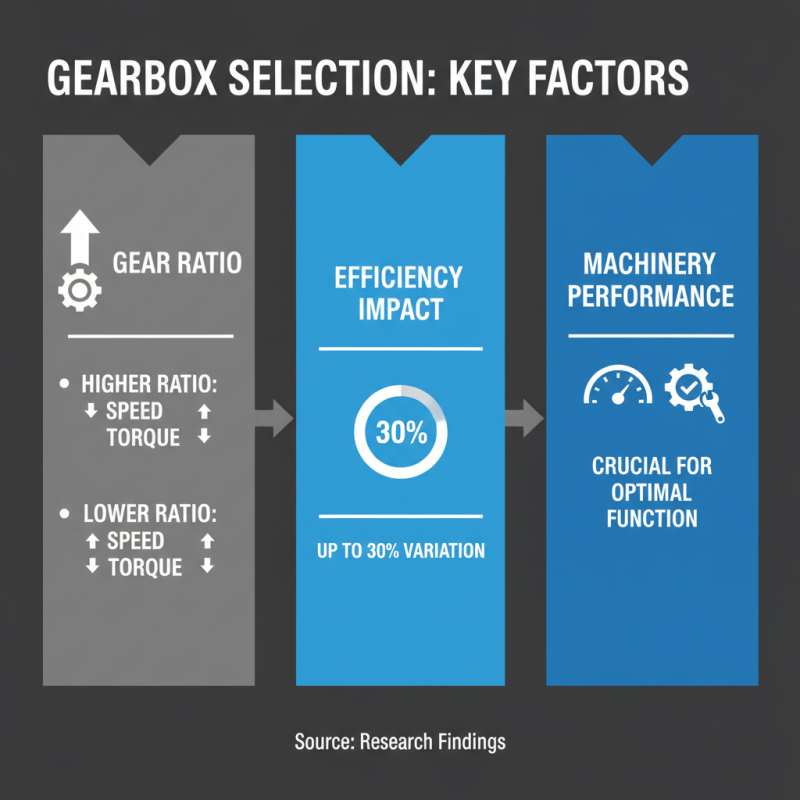
When selecting a reduction gearbox, it's important to focus on key factors that impact performance. Gear ratio plays a crucial role. A higher gear ratio reduces speed and increases torque. Conversely, lower ratios provide more speed but less torque. Research shows that gear ratios can affect efficiency by up to 30%. This variation can greatly impact machinery performance.
Another significant factor is load capacity. Each gearbox is designed for specific loads. Underestimating this can lead to failure. A report by the Machinery Maintenance Association states that improper load calculations account for nearly 20% of gearbox failures. Therefore, understanding both peak and constant loads is vital.
Material choice also matters. The durability of a gearbox often depends on the materials used. Aluminum and steel are popular, but they serve different purposes. Aluminum is lighter, while steel offers better strength. Depending on the application, selecting the right material can prevent unnecessary wear. Many users overlook this detail, which may lead to reduced lifespan and increased maintenance needs. Addressing these factors is essential for optimal performance.
The Importance of Load Capacity and Torque Requirements
When selecting a reduction gearbox, understanding load capacity and torque requirements is crucial. Load capacity defines how much weight the gearbox can handle without failure. Torque, on the other hand, is the rotational force produced. For instance, a torque requirement of 100 Nm may necessitate a specific gearbox type. Research shows that inadequate torque can lead to gear slippage or even mechanical breakdown, costing businesses time and money.
Tip: Always calculate your project’s peak load. This will ensure the gearbox you select meets the demands without exceeding its limits.
Consider that excess load can lead to premature wear. Industry reports indicate that gearboxes operating at 80% of their load capacity often have longer service lives than those used at full capacity. It's essential to factor in potential overload scenarios as well.
Tip: Evaluate the environmental conditions where the gearbox will operate. High temperatures or stress factors can affect load capacity and torque output.
Finally, evaluate the gearbox’s efficiency. A highly efficient gearbox will require less input power to deliver the necessary torque. This can result in significant energy savings over time. However, a focus solely on efficiency may compromise load capacity if not balanced correctly.
Essential Specifications for Reduction Gearboxes
This chart illustrates the essential specifications to consider when choosing the right reduction gearbox, highlighting load capacity, torque, RPM, efficiency, and cost. Each parameter is crucial for ensuring the gearbox fits the specific application requirements.
Analyzing Gearbox Efficiency and Performance Ratings
When selecting a reduction gearbox, understanding its efficiency is crucial. A gearbox's efficiency can significantly impact overall performance. Efficiency ratings are typically expressed as a percentage. High-efficiency gearboxes minimize energy loss, translating to cost savings and better machinery performance.
However, efficiency is only part of the equation. Users must also consider torque capacity and load ratings. These factors impact a gearbox's ability to handle specific applications. A gearbox with high efficiency but low torque capacity may not perform well under heavy loads. Testing under real conditions can reveal mismatches.
Performance ratings should not be taken at face value. Different manufacturers may use various testing standards. What works well in one scenario might fail in another. Seek independent reviews or case studies. Always analyze the operational environment. What are the specific needs? Identifying these requirements can lead to better decisions, ensuring the selected gearbox meets demands effectively.
10 Essential Tips for Choosing the Right Reduction Gearbox - Analyzing Gearbox Efficiency and Performance Ratings
| Feature |
Description |
Importance Rating (1-5) |
Efficiency (%) |
| Gear Ratio |
Determines the output speed and torque from the input. |
5 |
90 |
| Load Capacity |
Maximum load the gearbox can handle without failure. |
4 |
85 |
| Efficiency Rating |
Indicates the efficiency of power transfer within the gearbox. |
5 |
95 |
| Size and Weight |
Physical dimensions and weight of the gearbox. |
3 |
N/A |
| Material Quality |
The materials used in construction affect durability and performance. |
5 |
92 |
| Mounting Options |
Compatible mounting configurations for installation. |
4 |
N/A |
| Noise Levels |
Amount of noise produced during operation. |
3 |
N/A |
| Maintenance Requirements |
Frequency and type of maintenance needed for optimal performance. |
4 |
N/A |
| Heat Dissipation |
Effectiveness in managing operational heat. |
5 |
88 |
| Cost-Effectiveness |
Balancing performance with purchase and operating costs. |
4 |
N/A |
Common Mistakes to Avoid When Choosing a Reduction Gearbox
Choosing the right reduction gearbox can be tricky. One common mistake is not considering the load requirements. A gearbox that cannot handle the load may fail. This can lead to costly downtimes. Always check the torque specifications before investing.
Another pitfall is ignoring the environment where the gearbox will operate. Factors like temperature and humidity can affect performance. A gearbox that's suitable for one condition may not work in another. It's crucial to evaluate these aspects carefully.
Lastly, many overlook the importance of maintenance. Neglecting regular upkeep can lead to premature wear. A reduction gearbox may seem fine initially, but hidden issues can develop. It's wise to plan for routine inspections to ensure longevity.