How to Choose the Right Brushless Motor for Your Project?
Choosing the right Brushless Motor for your project can be daunting. There are many factors to consider, including efficiency, size, and application. Understanding these factors can significantly affect your project's success.
Brushless Motors offer advantages like reduced maintenance and increased lifespan compared to brushed alternatives. However, their selection process is not straightforward. You need to evaluate your specific needs, such as torque and speed requirements. This is where expertise plays a crucial role. Relying on experienced sources can guide you.
The reputation of the manufacturers also matters. A reliable brand often indicates quality and performance. Yet, not every popular motor will fit your needs. It is essential to reflect on the project goals and how each motor aligns with them. Avoid generic choices. A tailored approach leads to better outcomes.
Understanding Brushless Motors: Basics and Types
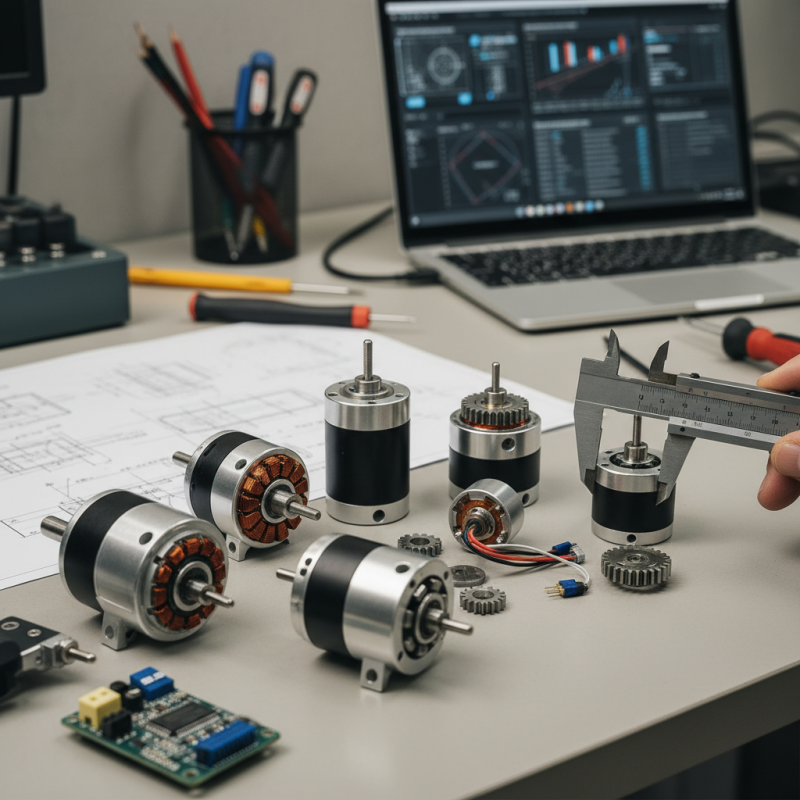
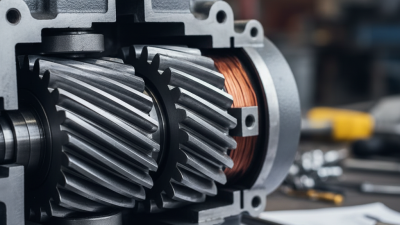
Brushless motors offer many advantages over traditional brushed motors. Understanding their basic components is crucial. A brushless motor consists of a rotor and a stator. The rotor is the rotating part, while the stator remains fixed. This design reduces friction, resulting in higher efficiency and longer lifespan.
There are several types of brushless motors, including BLDC and stepper motors.
BLDC (Brushless Direct Current) motors are widely used in drones and electric vehicles. They provide smooth operation and high torque at different speeds. Stepper motors, on the other hand, excel in applications needing precise positioning. They move in defined steps, making them ideal for 3D printers and CNC machines.
Selecting the right type for your project can be challenging. Each motor has its unique specifications and capabilities. It’s essential to consider factors such as power requirements, size, and application needs. Testing different motors might reveal unexpected challenges. For instance, a motor that performs well in one environment might struggle in another. Collecting data from real-world applications can lead to better choices in the future. Always be ready to adjust and refine your selection process.
Assessing Power Requirements for Your Specific Project
Assessing the power requirements for your specific project is crucial when selecting a brushless motor. Start by determining the torque and speed needed for your application. These factors will largely dictate the motor size and type. Consider the weight of the load being moved. A heavier load requires a more powerful motor, while lighter applications can use less robust options.
Tips: Always perform calculations for both peak and continuous power needs. Ensure that your motor can handle the demands over its entire operating range. Look into the efficiency ratings of the motor. Efficient motors can save energy and reduce operational costs.
Next, think about the power source. Brushless motors can run on AC or DC power. Make sure your power supply matches the motor specifications. Analyze how the power source capacity impacts performance. A mismatch can lead to overheating or damage.
Tips: For remote projects, consider battery life. Choose motors that are optimized for your battery type to maximize usage. Factor in how long you need the motor to run without intervention. These details will help you avoid potential pitfalls in your project's design.
Evaluating Motor Control and Compatibility Options
When selecting a brushless motor, evaluating motor control and compatibility is crucial. Different projects have varying power requirements. Ensure the motor can handle these demands efficiently.
Compatibility is another key factor. Look at your existing components. The motor's communication protocol should match your controller. This compatibility ensures smooth operation and responsiveness. Mismatched components can lead to performance issues, so double-check specifications before purchasing.
Tips: Always consult datasheets for technical specifications. These documents provide essential information on torque, speed, and voltage. A motor that is over-specified for your needs might waste energy and increase costs. Additionally, don’t hesitate to ask for advice from experienced users in forums or project groups. Their insights can provide valuable lessons and avoid potential mistakes.
Testing different setups is often necessary. Don't be afraid to experiment. Sometimes, the best solution emerges from unexpected combinations of motors and controllers. Embrace the discovery process and learn from each trial. Adjust your choices based on practical results. Understanding your project requirements and refining your motor selection can lead to improved efficiency and overall satisfaction.
Common Applications and Their Motor Selection Needs
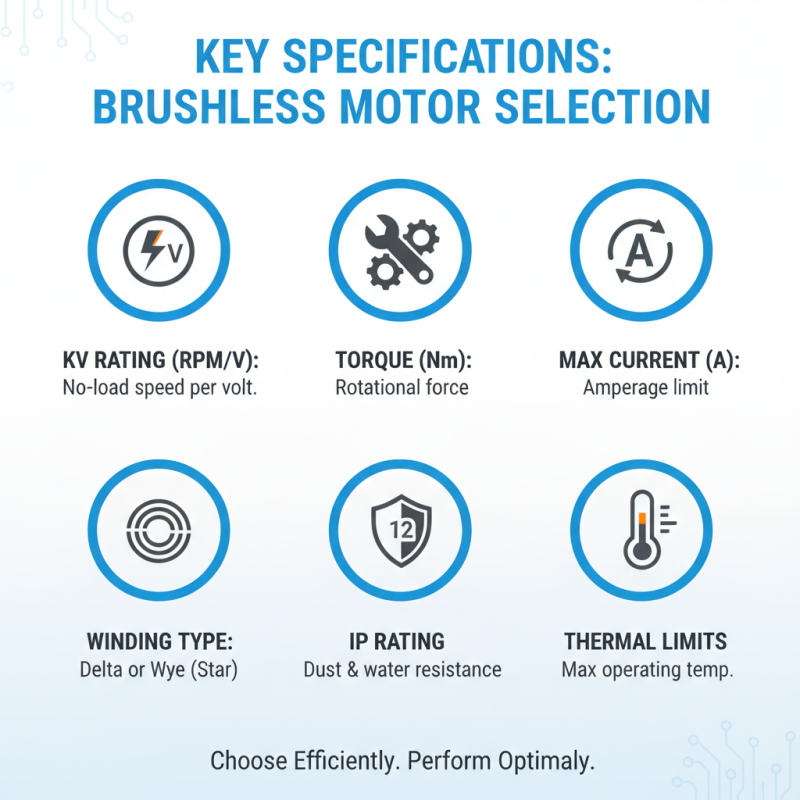
When selecting a brushless motor, understanding its common applications is crucial. For instance, drones often require high efficiency and low weight. A report by the International Journal of Electronics shows that drone motors need a thrust-to-weight ratio of at least 3:1. This consideration directly impacts the motor's KV rating and size. Proper calculations can lead to optimal performance in aerial applications.
Industrial automation sees different needs. Here, stability and torque at low speeds are essential. According to the IEEE, brushless motors in conveyor systems operate efficiently at varying loads. These motors must respond quickly to changes, which makes choosing the right controller vital. The details of the motor's winding and magnet strength should align with the specific task at hand.
Robotics is another area with unique demands. The movement precision can define project success. Research indicates that brushless motors need high-resolution encoders for feedback. However, achieving precise control often requires additional tuning and calibration. Each project presents its own set of challenges, demanding careful consideration during motor selection.