Why Choose a Motor Reducer for Your Mechanical Applications?
In today's competitive mechanical landscape, the choice of a Motor Reducer is vital. According to a recent market analysis, the global gear reducer market is projected to reach $8.6 billion by 2027. This growth emphasizes the importance of selecting the right components for efficiency and effectiveness.
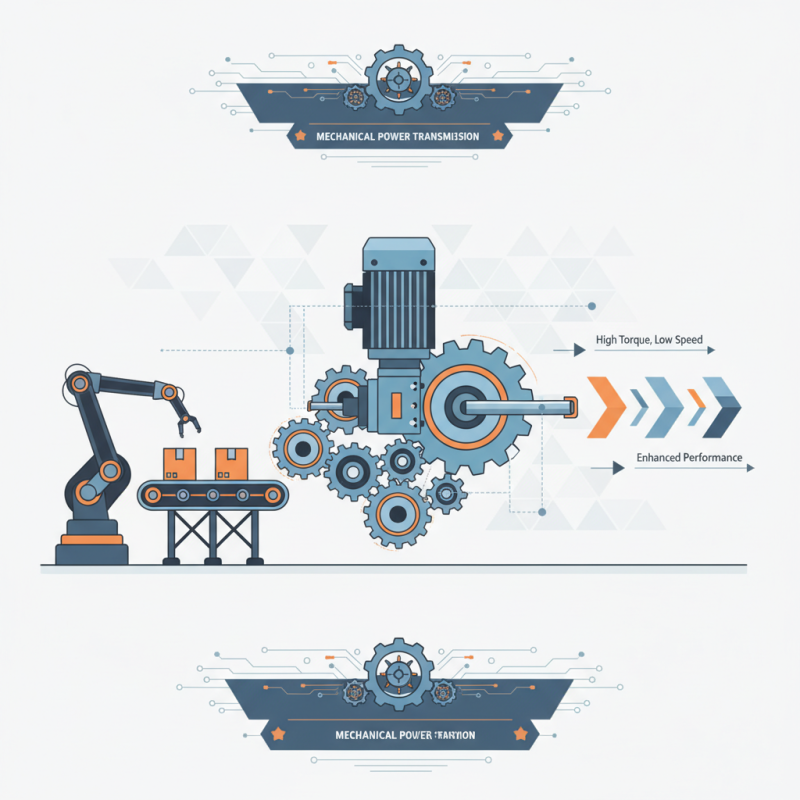
Motor Reducers play a crucial role in various industries, including manufacturing and automation. They help in reducing speed while increasing torque. This balancing act enhances performance in tasks from conveyor systems to robotics. However, not all Motor Reducers are made equal, requiring careful consideration of factors like load, speed, and application type.
Despite their advantages, Motor Reducers may introduce challenges such as increased complexity or maintenance needs. Selecting the wrong type could lead to inefficiencies. Addressing these concerns with expert advice can guide users to make informed choices, ultimately ensuring operational reliability and effectiveness.
Advantages of Motor Reducers in Mechanical Applications
Motor reducers play a crucial role in various mechanical applications. Their primary function is to adjust the speed and torque produced by a motor. By doing so, they enhance the efficiency of machinery, making it possible to operate under different conditions. In many cases, a motor reducer can lead to better energy consumption, reducing operational costs. It allows for smoother motion and greater control, which are essential in many industrial settings.
Reliability is another advantage of motor reducers. They are designed to handle high loads and provide consistent performance over time. This durability can minimize downtime and maintenance costs, which is invaluable for manufacturers. However, not all applications may require a motor reducer. It's essential to assess whether the added weight and complexity will truly benefit your specific setup.
Moreover, motor reducers can sometimes introduce challenges. For instance, selecting the wrong type can lead to inefficiencies. Proper sizing and configuration are critical. While these components can significantly enhance mechanical performance, poorly selected reducers can create additional issues. Balancing the advantages with potential pitfalls is vital for optimal operation.
Why Choose a Motor Reducer for Your Mechanical Applications? - Advantages of Motor Reducers in Mechanical Applications
| Feature |
Description |
Advantages |
| Torque Increase |
Motor reducers increase the torque output while decreasing speed. |
Ideal for applications requiring high torque at low speeds. |
| Space Efficiency |
Compact design allows for efficient use of space in machinery. |
Reduces overall footprint, making it suitable for tight spaces. |
| Energy Efficiency |
Designed to optimize energy consumption through reduced output speed and increased torque. |
Lower energy costs and enhanced sustainability. |
| Versatility |
Applicable in various industries including manufacturing, automotive, and robotics. |
Broad range of applications ensures adaptability to numerous mechanical setups. |
| Noise Reduction |
Designed to operate quietly, minimizing operational noise. |
Improves working conditions in sensitive environments. |
Key Components of Motor Reducers and Their Functions
Motor reducers play a crucial role in mechanical applications. They are essential for
controlling speed and torque. Understanding their components is key to leveraging their benefits.
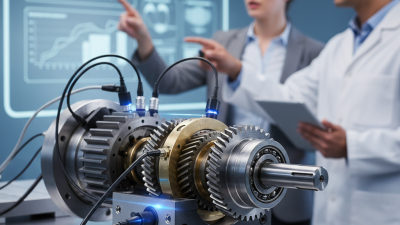
The primary components of a motor reducer include
gears, input and output shafts, and bearings.
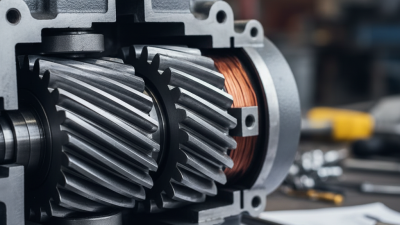
Gears are responsible for reducing the rotational speed while increasing torque. This efficiency in energy transfer is vital for many machines. Input and output shafts connect the motor to the load, transmitting power effectively.
Each shaft must be precisely aligned to avoid operational issues.
Bearings support the shafts, ensuring smooth operation. They reduce friction, allowing for better performance. However, wear over time can lead to reduced efficiency. Regular maintenance is necessary to extend their lifespan. Also, not every application requires the same type of reducer.
Selecting the right configuration is essential for optimal performance.
How Motor Reducers Improve Efficiency and Performance
Motor reducers are essential components in many mechanical applications, significantly enhancing efficiency and performance. Research shows that using a motor reducer can improve energy efficiency by up to 30%. This improvement is crucial for industries aiming to reduce operating costs while maintaining high-performance standards. The combination of speed reduction and torque increase minimizes energy waste.
These systems enable motors to operate at optimal RPMs, allowing for smoother operation. Many facilities experience a reduction in maintenance costs due to decreased wear and tear on machine parts. A well-designed motor reducer minimizes vibrations and noise, creating a better working environment. In fact, data indicates that gearbox efficiency ratings can reach over 90% in optimal conditions.
However, it is important to consider the initial installation costs and complexity. Some users may find it challenging to integrate motor reducers into existing systems. Proper alignment and installation are critical for performance. Potential issues like overheating can arise if not addressed. It's essential to assess the specific needs of your application before making a decision. Investing in a higher-quality motor reducer can yield long-lasting benefits, but the upfront considerations cannot be overlooked.
Selecting the Right Motor Reducer for Specific Applications
When selecting a motor reducer for mechanical applications, it’s crucial to assess specific requirements. Different applications call for distinct torque, speed, and efficiency. Understanding these needs will guide your choice.
Consider the load requirements. A motor reducer must handle not just the required torque, but also possible overloads. Failing to account for these factors can lead to premature failure. Assessing load profiles in advance can save future headaches.
Tip: Always check the mounting configurations. Motor reducers come in various designs, and compatibility with existing setups is key.
Space constraints also matter. Some applications may need compact solutions, while others can accommodate bulkier units. Reflecting on space and layout early will streamline the selection process.
Tip: Don’t overlook cooling and maintenance needs. Efficient heat dissipation can prolong the life of your motor reducer. Regular check-ups may prevent unexpected breakdowns. Balancing all these factors ensures your application runs smoothly.
Common Industries That Benefit from Motor Reducers
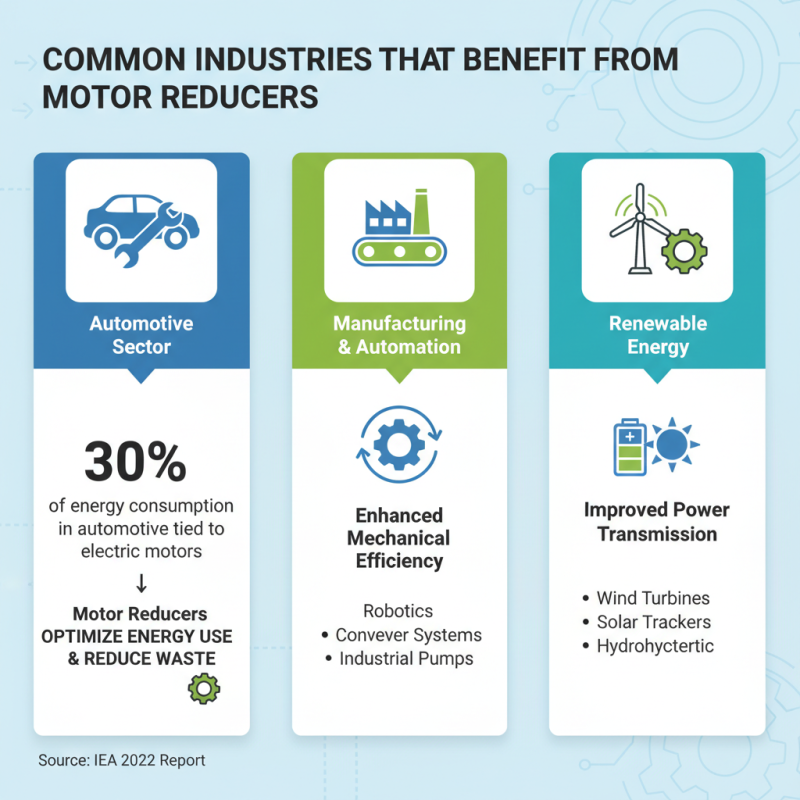
Motor reducers play a crucial role in various industries by enhancing mechanical efficiency. The automotive sector relies heavily on these devices. According to a 2022 report from the International Energy Agency (IEA), nearly 30% of energy consumption in this industry is linked to electric motors. By integrating motor reducers, automotive manufacturers can optimize energy use, reducing waste and operational costs.
Food and beverage production also significantly benefits from motor reducers. The Food Processing Technology journal noted that about 60% of the energy used in processing plants is consumed by motors. Efficient motor reducers minimize energy losses, allowing for improved production speeds without compromising on safety standards. This is vital in a sector where timing can impact quality and compliance.
In material handling, companies often face challenges with load variations. A study from the Association for Machinery and Equipment Manufacturing indicated that motor reducers can enhance load stability by up to 40%. This enhances overall system reliability. However, some firms overlook maintenance, leading to unexpected failures. It's essential to routinely assess these systems to ensure their long-term functionality.