2026 Top Planetary Gearboxes for Global Buyers?
In 2026, global buyers will evaluate Planetary Gearboxes beyond price and reduction ratio. Compact machines now demand high torque density, low backlash, quiet operation, and predictable service intervals. A gearbox may look impressive on a specification sheet. It can still fail under shock loads, poor lubrication, or misaligned installation.
Recent market studies from Grand View Research, MarketsandMarkets, and Fortune Business Insights indicate continued growth in planetary gearbox demand. Their reports connect this expansion with robotics, wind energy, electric vehicles, automation, and advanced material-handling systems. However, market estimates differ because analysts define “planetary gearbox” differently. That inconsistency deserves attention.
David H. Childs, author of Gear Drive Systems, describes planetary gear trains as compact, coaxial mechanisms that distribute transmitted load across several gears. That principle remains central today. More contact points can improve torque capacity, but manufacturing accuracy still matters. Tiny errors can become vibration, heat, and premature bearing wear.
This guide compares leading 2026 options for international purchasers. It considers rated torque, efficiency, backlash, noise, thermal limits, protection ratings, customization, documentation, and after-sales support. Standards such as ISO 6336, AGMA 2101, and IEC requirements provide useful checkpoints, though certification alone does not guarantee field performance.
Some buyers focus too heavily on maximum torque. That is a mistake. A gearbox running beside a hot motor, under cyclic loads, needs a wider safety margin. The best choice may not be the cheapest or the most powerful. It should fit the machine, duty cycle, environment, and maintenance capability.

Planetary Gearbox Basics: 3–10,000:1 Ratios and 90–98% Efficiency
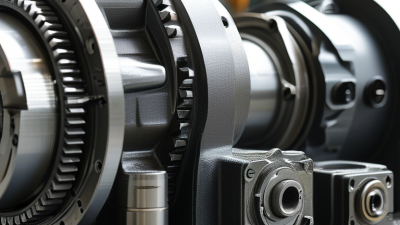
Planetary gearboxes combine a sun gear, planet gears, and a ring gear in a compact housing. Their shared load path supports high torque density. Typical ratios range from 3:1 to 10:1 per stage. Multiple stages can approach 10,000:1. That number needs caution.
Efficiency commonly reaches 90–98%, according to supplier test ranges and engineering references. However, efficiency changes with speed, lubricant temperature, sealing drag, and load. A single stage may reach 98%. Four stages at 97% each deliver about 88.5% overall efficiency. The headline is useful, but incomplete.
The U.S. Department of Energy’s Motor Systems Market Assessment reports that motor-driven equipment uses roughly 69% of industrial electricity in American manufacturing. Small gearbox losses therefore become expensive across continuous-duty lines. Grand View Research’s industrial gearbox analysis projects market growth near 5% annually through the decade, reflecting demand for compact, efficient transmission systems.
For global buyers, verify ratio, rated torque, peak torque, backlash, thermal capacity, and service factor. Ask for test conditions. Also request ISO 9001 certification evidence, inspection records, and lubrication guidance. A gearbox rated at 98% may perform differently in a dusty plant or under repeated shock loads. I would treat extreme ratio claims carefully. Real machinery is rarely as clean as the laboratory.
Comparing 2026 Models by Torque Density, Backlash, and Service Life
The 2026 planetary gearbox market is moving toward higher torque density, tighter backlash, and longer service intervals. The International Federation of Robotics reported more than 540,000 industrial robots installed worldwide in 2024. That growth increases demand for compact reducers that tolerate repeated acceleration, shock loads, and thermal cycling.
Torque density
should be compared in Nm per kilogram, not by torque alone. A practical 2026 benchmark is above 100 Nm/kg for compact robotic axes, although housing size and duty cycle can distort this figure. Backlash below 10 arcminutes suits general automation. Precision positioning may require less than 5 arcminutes. These values still need verification under rated load, not at no-load conditions. That detail is often overlooked.
Service life should follow ISO 281 bearing calculations and ISO 6336 gear-strength principles. An L10 rating means 90% of identical units are expected to reach the calculated life, not every unit. For demanding applications, buyers should request thermal data, torsional stiffness, lubrication intervals, and measured backlash after endurance testing. A gearbox promising 20,000 operating hours may perform differently in a hot, dusty plant. I would also question impressive torque-density claims without duty-cycle charts. They look useful. Sometimes, they are incomplete.
Global Compliance: ISO 6336, AGMA 6123, CE, and IEC Compatibility
2026 Top Planetary Gearboxes for Global Buyers
Global compliance begins with engineering evidence, not a certificate placed in a folder. Buyers should request ISO 6336 calculations for tooth bending and contact strength. These calculations help verify load capacity, service life, and safety margins. The report should match the actual gear geometry, material, speed, and lubrication.
AGMA 6123 requires careful interpretation. It may support evaluation of enclosed reducer design, but it does not automatically certify every planetary gearbox. Ask the supplier to explain its exact application and calculation method. Check the sun gear, planet gears, carrier, bearings, and housing under real duty cycles. A gearbox running at 1,500 rpm needs different evidence than one facing frequent shock loads. Small details matter.
CE compliance concerns applicable European requirements, risk assessment, technical files, and declarations. It is not simply a quality badge. IEC compatibility should cover motor interfaces, electrical protection, insulation, and installation conditions where relevant. Confirm voltage, frequency, mounting dimensions, shaft tolerances, and control-system connections before ordering. A missed interface can stop an entire line.
No checklist is perfect. Test data may also expose uncomfortable assumptions. Independent inspection, traceable materials, noise checks, temperature readings, and backlash measurements improve buyer confidence. The strongest supplier answers specific questions without hiding behind general certificates.
Buyer Scorecard: Load, Duty Cycle, IP Rating, Warranty, and Total Cost
2026 Top Planetary Gearboxes for Global Buyers? The real test is the buyer scorecard: load, duty cycle, IP rating, warranty, and total cost. The International Federation of Robotics recorded 541,302 industrial robot installations in 2023, increasing demand for compact, repeatable motion systems. Buyers should verify continuous torque, peak torque, shock loads, and radial forces separately. A gearbox rated only for nominal torque may fail under acceleration or emergency stops. Measure the actual load profile.
Duty cycle deserves equal attention. A unit running eight hours daily faces different thermal stress than one operating intermittently. Record starts per hour, operating speed, ambient temperature, and reversing frequency. Small details matter. The U.S. Department of Energy notes that motor-driven systems can consume more than half of industrial electricity, making efficiency and correct sizing important for total cost. IP ratings should match the site, not the brochure: IP65 may suit dust and low-pressure water, while washdown or chemical exposure requires deeper assessment. IEC 60529 provides the classification framework, but sealing can age in real service.
Warranty length is useful, yet warranty conditions matter more. Check installation limits, lubrication rules, response times, and exclusions. My own scorecards have sometimes overvalued purchase price and undervalued downtime. That was a costly mistake. Compare energy use, spare-unit inventory, maintenance hours, shipping, and expected service life. A cheaper gearbox is not cheaper when replacement takes six weeks. Third-party test records and documented calculations should outweigh polished claims.